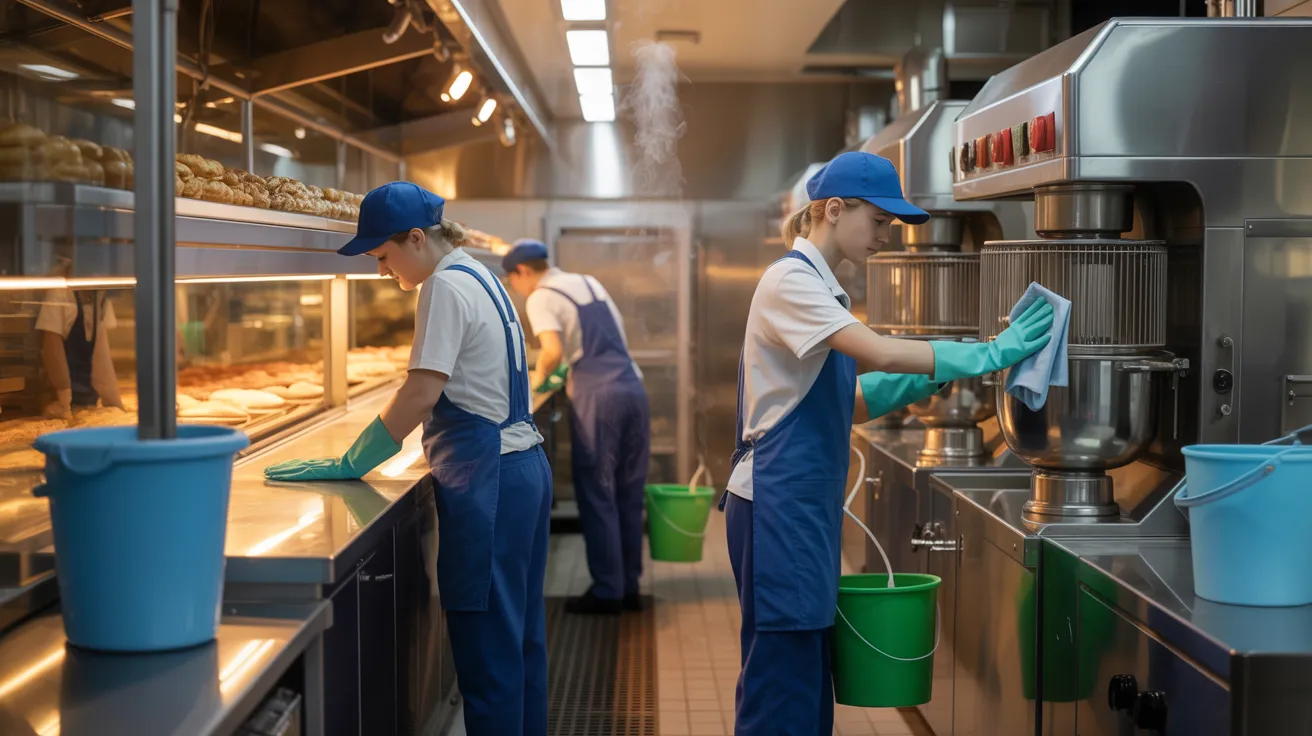
Professional sanitation and food hygiene professionals in Brampton assist restaurants, commissaries, baking facilities, warehouses, and food service operations maintaining standards. They sanitize regularly touched surfaces, food contact areas, equipment, floors, drains, restrooms, and food handling spaces with approved chemicals, maintaining proper ratios, and documenting contact times. You need scheduled cleaning based on hazard level, volume, food allergies, and regulatory assessments, plus documented proof that support HACCP, audits, and public health compliance. The sections below outlines how effective cleaning systems should include.
Main Points
- Brampton sanitation experts support restaurants, grocery departments, commissaries, warehouses, bakeries, schools, mobile vendors, and allergen-sensitive operations.
- Cross-contamination reduction is ensured by sanitizing high-touch surfaces, food-contact equipment, kitchens, floors, drains, restrooms, and storage areas with area-specific procedures.
- Validation of proper chemical concentration, suitability, and contact time is conducted by approved vendors, with completion filed using checks, inspections, and correction logs.
- Everyday, recurring, and cyclical duties distributed by location form cleaning calendars grounded on hazard, throughput, switches, incidents, and standards.
- Emphasize contractors demonstrating hazard analysis knowledge, public-health understanding, safety training education, liability, endorsements, coded tools, and assessment-ready hygiene paperwork.
What Brampton Venues Require Food Safety Cleaning?
Any Brampton facility that manages, stores, prepares, packages, or serves food needs sanitation protocols. You must follow it if your operation falls under health department oversight, food regulations, or HACCP requirements. That requirement covers dining establishments, break rooms, food warehouses, market sections, butcheries, seafood areas, retail shops, and facility kitchens.
Documented food sanitation is furthermore necessary in supply facilities, manufacturing operations, cold storage areas, bakery retailers, educational nutrition programs, banquet halls, and food delivery hubs. Mobile and temporary establishments are included, including catering vehicles, festival sellers, and pop-up stands. Your location needs recorded sanitation procedures when your workers work with ingredients, section finished dishes, heat items, or keep allergens organized. In Brampton, food safety continues to be not elective; it constitutes lawful, operational, and customer protection adherence.
Which Areas Do Brampton Cleaning Experts Cover?
You need skilled cleaning experts who disinfect high-touch surfaces, kitchen spaces, floor areas, and restroom facilities to maintain food safety and public health requirements. These locations are prioritized due to their high cross-contamination potential, slip and fall dangers, and regulatory breaches.
If you grasp what they sanitize, you'll successfully ensure your facility meets all operational and regulatory compliance needs.
Critical High-Touch Surface Sanitizing
Brampton cleaning providers emphasize high-touch surface sterilization because of the potential of pathogens and contaminants transferring across the establishment. You should establish a documented schedule for cleaning entry points, contact surfaces, control panels, railings, shared devices, registers, and cold storage handles. Implementing area assessment techniques, experts locate every commonly touched surface and establish cleaning intervals
if findings are below specified thresholds. They also prevent cross-contamination by swapping wipes, following unidirectional procedures
Food Prep Areas, Flooring, and Sanitary Facilities
Expect Brampton cleaning experts to target kitchens, floors, and restrooms because each area carries distinct food safety, accident prevention, and public health risks. In industrial kitchens, you need grease removal from cooking stations, appliance surfaces, drain systems, preparation areas, and backsplashes to minimize bacterial growth and pest activity.
Floor care that is documented should also be anticipated. Technicians clean and remove buildup from tile grout, ceramic surfaces, and vinyl floors, then apply appropriate drying controls so you can limit falls and meet regulatory standards. They also address entry points where dampness and dirt enter the building.
For restroom sanitation, cleaners disinfect touchpoints, fixtures, partitions, dispensers, and waste containers, then refill items and eliminate smells. They also maintain restaurant cleaning supply rooms where product storage, sink cleanliness, and drain systems impact daily sanitation standards and worker protection.
Food Safety Cleaning Significance for Brampton Businesses
Brampton facilities require proper hygiene standards to fulfill compliance obligations and pass audits. You also reduce cross-contamination by cleaning and sanitizing food-contact surfaces, equipment, and high-touch areas correctly. Most importantly, you help protect public health by lowering the risk of foodborne illness in your facility.
Sanitary Standards Adherence
Brampton food businesses must comply with mandatory safety protocols, so sanitation practices is key to satisfying health codes, protecting customers, and preventing penalties. You must maintain sanitary food-contact surfaces, verifiable cleaning logs, safe chemical management, and verifiable staff procedures that meet municipal and provincial inspection expectations.
Inspectors review your operation to determine that your cleaning program maintains proper stock preservation, machinery hygiene, refuse management, and washroom maintenance.
Contamination Prevention
Maintaining health code standards copyrights on your power to stop cross-contamination during daily food handling and cleaning. You need to partition uncooked items from finished dishes, sterilize work zones between assignments, and position cleaning agents away from food surfaces. Clear procedures reduce transfer risks and reinforce steady regulatory adherence.
Implementing allergen segregation helps ensure major allergens don't touch communal work zones, bins, or devices. Deploy dedicated cutting boards, color-coded tools, and strict utensil labeling so staff don't mix items while preparing or distributing. Enforce hand hygiene following fresh proteins, aquatic items, egg products, or allergen materials. Replace wiping cloths regularly, and verify sanitizer strength with test strips. When you train staff to follow these controls every shift, you create a cleaner, safer operation that meets Brampton's food safety expectations daily.
Public Health Defense
If proper sanitation declines, you don't merely risk a failed inspection—you boost the probability of foodborne illness harming customers, staff, and the broader Brampton region. You also undermine your responsibility in protecting public health, especially in busy food facilities where pathogens travel quickly through surfaces, equipment, and touchpoints.
You depend on sanitation protocols that remove soils, effectively sanitize, and ensure effectiveness. This involves maintaining contact periods, utilizing authorized sanitizers, maintaining records, and coaching staff to fulfill compliance standards. These actions support disease prevention by reducing microbes before contaminating food or hands. In Brampton, robust sanitation shields vulnerable populations, curtails outbreak likelihood, and demonstrates accountability. When you adhere to proper protocols, you go beyond regulations—you meaningfully lower danger and promote secure food service across the region.
How Does Cleaning Support Food Safety Compliance?
Maintaining rigorous cleaning routines strengthens food safety compliance by reducing contamination risks, managing pathogen expansion, and keeping your facility aligned with sanitation requirements under HACCP-based programs and public health regulations. You confirm that food-contact surfaces are visibly clean and microbiologically controlled, enabling documented preventive controls and inspection readiness.
Cleaning initiatives additionally amplify allergen mitigation by removing residues that can cause undeclared allergen exposure.
Determining When to Plan Commercial Cleaning
food-contact surfaces, bathrooms, and high-contact areas
facility closures, seasonal-driven soil buildup, or pest activity periods.
Selecting the Right Brampton Cleaning Experts: Key Considerations
Begin by evaluating providers based on food-safe sanitation requirements—not solely on budget. You should confirm that each organization comprehends CFIA, public health, and HACCP-aligned expectations applicable to your facility. Request insurance certificates, WHMIS compliance, staff training documentation, and oversight procedures. Assess whether technicians recognize cross-contamination hazards, chemical handling protocols, and verifiable sanitation records.
You should further examine service consistency and answerability. Request testimonials from Brampton food businesses, then review reply speed, corrective action plans, and communication standards. Validate the company facilitates supplier audits and can supply compliance documentation to regulators or third parties. Confirm equipment receives maintenance, colour-coded tools are used appropriately, and site-specific hazards are identified. A experienced service ensures regulatory compliance, product quality, and your reputation in the market.
What aspects should a sanitation plan include?
Establish a documented plan that establishes every sanitation duty, standard, and accountability ahead of production commencement. You should specify cleaning frequencies, approved chemicals, dilution rates, contact times, tools, and verification methods for each zone, surface, and piece of equipment. Add pre-operational inspections, corrective actions, and employee training requirements.
Your program should also address cross-contamination controls, waste handling, pest-prevention measures, and documented schedules for restrooms, drains, floors, and food-contact areas. Explain how you'll keep raw and prepared foods apart, enable ingredient tracking, and maintain accurate allergen labeling through validated cleaning between product changes. You should designate accountability, keep signed records, and review results against regulatory standards, HACCP controls, and customer requirements. When gaps appear, revise procedures immediately and re-educate staff.
Frequently Posed Questions
Do sanitation providers work during nighttime hours at Brampton properties?
Yes, you can arrange sanitation coverage to support nighttime operations in Brampton facilities. You'll organize overnight sanitation around operational windows, security measures, and personnel needs. Providers typically establish overnight logistics to minimize interruption, ensure compliance, and record finished work. You should verify response times, management, access protocols, and waste handling before beginning service. If you operate controlled environments, you'll also need documentation that enable audits and internal quality assurance.
Are emergency spill response solutions provided from Brampton cleaning experts?
Yes, matching information you can locate Brampton sanitation experts providing hazard containment services. They manage contamination, evaluate risks, isolate contamination, and begin swift decontamination to reduce risk and prevent business disruption. You should verify response rates, certifications, PPE measures, and waste procedures. If your facility must meet compliance standards, pick a provider that tracks incidents, follows procedures, and ensures audit compliance.
Do plant-based disinfectants operate safely on food-contact surfaces?
Yes, plant-based sanitizers can be suitable for food-contact surfaces if you choose disinfectants approved for food contact and complying with regulations. You should confirm exposure duration, mixing proportions, and rinse requirements before implementation. Many natural-based solutions minimize chemical hazards, but you should gather evidence of effectiveness against relevant pathogens. To preserve residue-free areas, you must adhere to manufacturer instructions exactly and verify the disinfecting agent complies with relevant food safety standards.
Can sanitation programs be tailored for seasonal production changes?
Yes, you can modify sanitation programs for seasonal variations. You should adapt timing, staffing, sanitizers, and testing procedures to correspond to seasonal patterns while preserving compliance standards. You'll minimize production interruptions by planning sanitation around changeovers, peak seasons, and usage patterns. You should additionally update procedural documents, instruction programs, and facility monitoring to reflect periodic risks, emerging allergens, or increased soiling. Continuous reviews keep your strategy efficient.
Do professional cleaners instruct staff members in sanitation best practices?
Yes, commercial cleaners often train your staff on sanitation best practices. You receive employee instruction on correct chemical application, contact times, cross-contamination prevention, equipment disassembly, and record keeping. They generally follow training with HACCP, GMP, and CFIA or local public health regulations. Many perform sanitation audits to confirm adherence, spot deficiencies, and strengthen remedial steps. This helps you sustain uniform processes, succeed in audits, and reduce food safety risks daily.
Summary
Through engaging Brampton food safety and commercial cleaning experts, you accomplish much beyond organizing—you keep your operation prepared for audits and your standards stay aligned with regulations. From kitchen spaces to processing areas, all clean areas and kept corners reduce contamination risks and prevent significant costs. Through scheduling maintenance on suitable timelines and adhering to a comprehensive cleaning program, you ensure protection for your team, clients, and your good name. In a tightly controlled regulatory landscape, proper sanitation must be a priority—they are fundamental to success.